
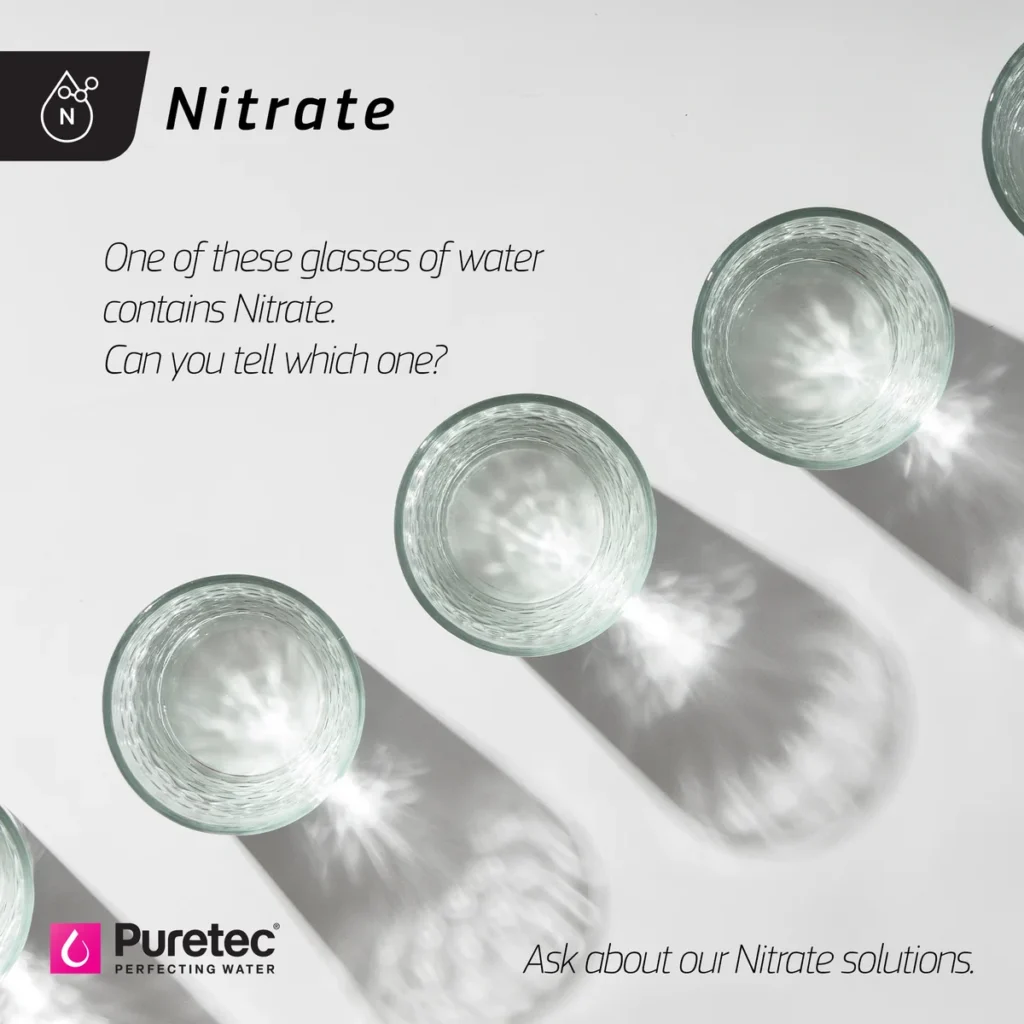
Nitrate can’t be seen, and Puretec describes it as one of the most common groundwater contaminants in rural areas, coming mainly from fertilisers and septic systems. The first step is a water test. Puretec’s options are the RO270 reverse osmosis system at your drinking tap, or a whole-house NTR series nitrate-selective resin system with a WH2-55 pre-filter. For health guidance, especially for babies and infants, follow your state health department’s advice.
Where does nitrate come from?
According to Puretec, nitrate originates primarily from fertilisers and septic systems, and can also be found in mains water supplies exposed to the same contaminants. Puretec states nitrate is particularly harmful to babies and infants and can have a significant effect on anyone’s health when levels exceed 100 mg/L. Don’t rely on taste or appearance – test.
Test your water first
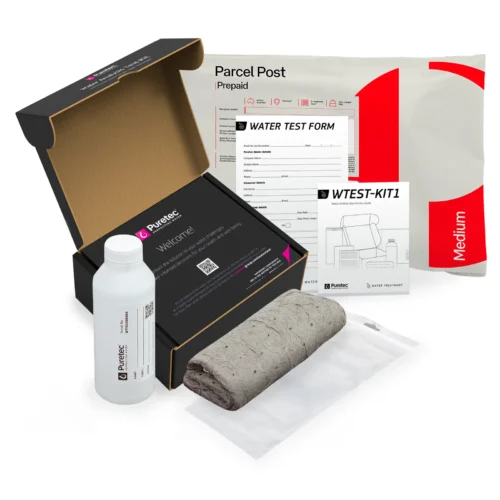
For bore water, Puretec recommends a water test so it can design a filtration solution for all of your water’s contaminants. Its Water Analysis Test Kit includes nitrate alongside pH, hardness, iron, fluoride and other parameters. Post your sample in the prepaid bag and Puretec returns an analysis with recommendations.
Whole-house protection: NTR series with WH2-55
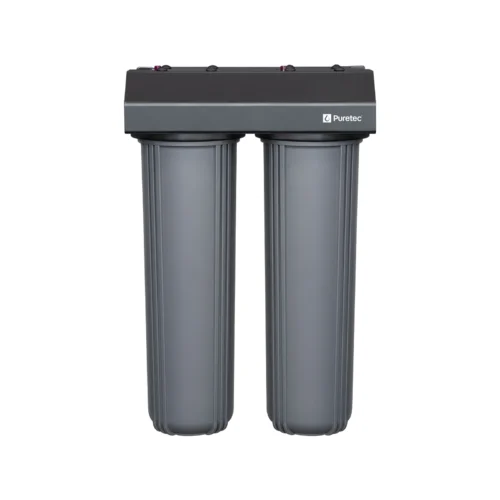
Puretec’s NTR series (for example the NTR40-E3) uses nitrate-selective ion-exchange resin and automatically regenerates the resin with salt during backwash, which Puretec says provides long resin life and minimal maintenance. Puretec pairs it with a WH2-55 whole-house filter, which helps protect the nitrate resin and extend its life while reducing chlorine, taste, odour, chemicals and sediment. NTR systems are specified to suit your test results – call us to discuss.
Drinking water: RO270 reverse osmosis
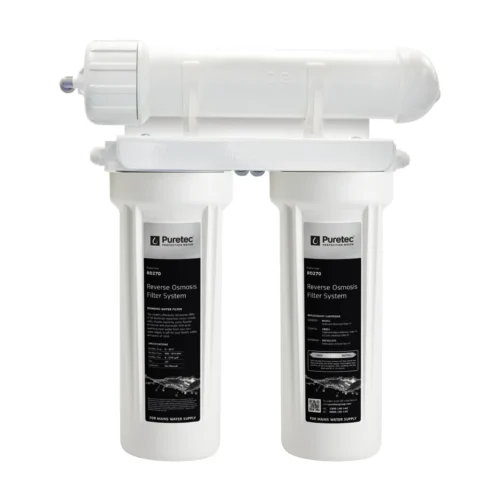
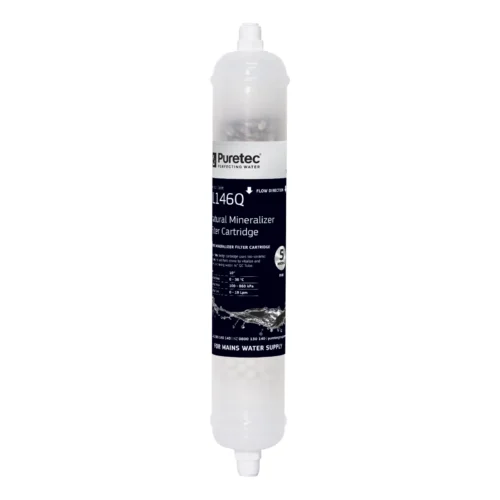
The RO270 uses reverse osmosis to reject impurities and flush them down the drain. Puretec states it reduces up to 96% of all dissolved impurities, heavy metals, salts, viruses, bacteria, cysts, fluoride, nitrate, chlorine, taste, odour and chemicals. Puretec suggests adding the IL146Q mineraliser, which adds calcium carbonate to improve taste and lift the pH to neutral.
Which option suits you?
| RO270 + IL146Q | NTR series + WH2-55 | |
|---|---|---|
| Coverage | One drinking tap | Whole house |
| How it works | Reverse osmosis membrane | Nitrate-selective ion-exchange resin, regenerated with salt |
| Also reduces | Fluoride, heavy metals, salts, chlorine and more | WH2-55 reduces chlorine, chemicals and sediment |
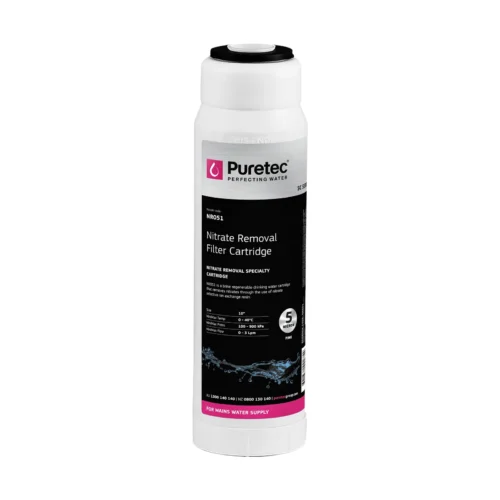
We also stock the NR051 nitrate removal cartridge – ask us whether it suits your water and system before ordering.
Installation: connection to your water supply must be carried out by a licensed plumber, and any hard-wired electrical work by a licensed electrician.
Recommended products
- Puretec Water Analysis Test Kit – confirms your nitrate level and other contaminants before you choose.
- Puretec RO270 reverse osmosis system – reduces nitrate along with up to 96% of dissolved impurities at your drinking tap.
- Puretec IL146Q inline mineraliser – Puretec’s add-on for RO water to improve taste and lift pH.
- Puretec WH2-55 – whole-house pre-filter Puretec pairs with its NTR nitrate systems.
- Puretec NR051 nitrate removal cartridge – also available – check suitability with us first.
Puretec Water Analysis Test Kit
Original price was: $201.06.$149.00Current price is: $149.00. inc GST Add to cartPuretec RO270 High Loop Designer Faucet With Reverse Osmosis Dual Filter
Original price was: $1,096.04.$899.00Current price is: $899.00. inc GST Add to cartPuretec IL146Q Inline Mineraliser Cartridge
Original price was: $197.92.$179.00Current price is: $179.00. inc GST Add to cartPuretec WH2-55 Whole House Dual System 20″ Maxiplus
Original price was: $1,183.49.$979.00Current price is: $979.00. inc GST Add to cartPuretec NR051 Nitrate Removal Cartridge
Original price was: $268.61.$219.00Current price is: $219.00. inc GST Add to cart
Frequently asked questions
Can I see or taste nitrate in water?
Puretec notes nitrate-contaminated water can’t be seen, which is why testing is the only way to know your level.
Does a standard carbon filter remove nitrate?
Puretec’s nitrate solutions are reverse osmosis (RO270) and nitrate-selective ion-exchange resin (NTR series). Standard carbon filters are designed for chlorine, taste and odour.
Can mains water contain nitrate?
Puretec says nitrate is most common in rural groundwater but is also found in mains supplies where the water is exposed to the same contaminants.
What nitrate level is a concern?
Puretec states nitrate can significantly affect health when levels exceed 100 mg/L and is particularly harmful to babies and infants. Follow your state health department’s guidance for your situation.
Related guides: Fluoride filtering options, Iron staining and bore water, Which water filter do I need?.
Questions? Call or text 0447 203 775 or email [email protected] and we will help you choose.